Every day on social media or in therapy sessions, I hear the same question:
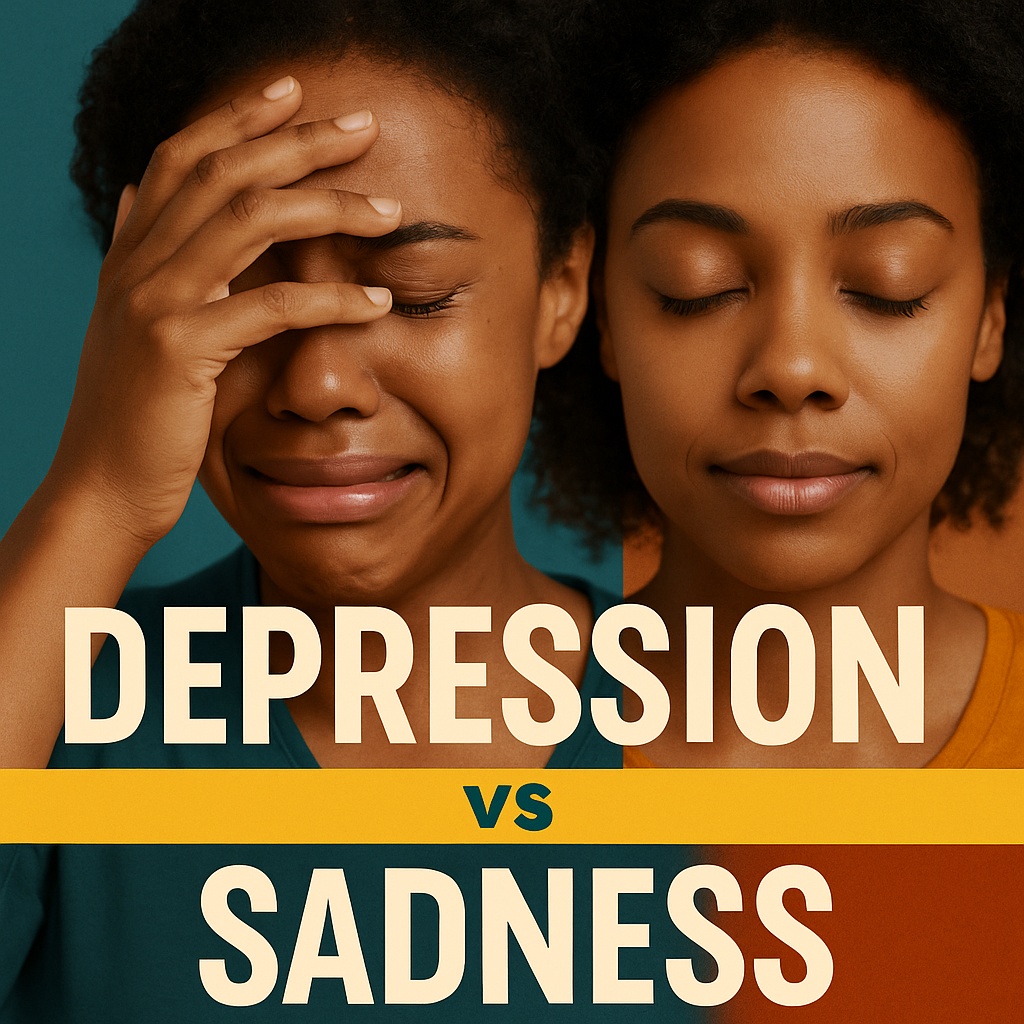
“What’s the difference between being depressed and just feeling sad?”
If you’ve ever felt confused trying to understand what your loved one is going through—or even questioned your own emotional state—this is for you.
Too often, people mistake depression for laziness or weakness. But that misunderstanding can be harmful, especially when someone is silently suffering. So let’s break down the key differences between depression and sadness, why it matters, and how to support yourself or someone you love.
What Is Sadness?
Sadness is a normal, healthy emotion that every human being experiences. It’s often a direct response to something specific—like a breakup, a loss, a disappointment, or even a moving scene in a movie.
Sadness:
Usually has a clear cause or trigger
Comes and goes
Doesn’t typically interfere with daily life for long
Can be relieved with comfort, time, or a change in circumstances
Sadness might leave you feeling down for a few hours or even a couple of days. But it doesn’t usually cause long-term changes in how you think about yourself or the world. When sadness passes, most people return to their normal level of functioning.
Example: You didn’t get the job you wanted, and you feel discouraged. You cry, vent to a friend, eat ice cream—and the next day, you start updating your resume and moving forward. That’s sadness.
What Is Depression (Major Depressive Disorder)?
Depression, or Major Depressive Disorder (MDD), is a clinical mental health condition. It’s not just “feeling down”—it’s a persistent state of low mood and hopelessness that affects how a person thinks, feels, and functions.
Key symptoms of depression include:
Ongoing sadness or emptiness lasting two weeks or more
Loss of interest or pleasure in things you used to enjoy
Trouble sleeping or sleeping too much
Fatigue or lack of energy nearly every day
Difficulty concentrating, remembering, or making decisions
Feelings of worthlessness, shame, or guilt
Thoughts of death or suicide
Significant changes in appetite or weight
Unlike sadness, depression can make even the smallest tasks feel overwhelming. Getting out of bed. Brushing your teeth. Going to work or school. Interacting with people you love. It can feel impossible.
This is what we call clinical impairment—a disruption in daily functioning across social, work, or personal areas of life.
Depression Is Not a Character Flaw
One of the biggest myths about depression is that someone just “isn’t trying hard enough.”
But depression isn’t laziness. It’s not attention-seeking. It’s not about being weak or dramatic.
It’s a medical condition that often involves chemical imbalances in the brain—particularly serotonin, dopamine, and norepinephrine. It can be influenced by genetics, trauma, ongoing stress, or major life transitions.
And for many people of color, women, and caregivers, the cultural and generational weight of being the “strong one” can make it even harder to recognize or treat.
What Else Can Contribute to Depression?
Some medical conditions and lifestyle factors can mimic or worsen depressive symptoms. A few to be aware of:
Thyroid disorders
Diabetes or chronic illness
Substance use (alcohol, cannabis, or other drugs)
Side effects from medication
Postpartum hormonal shifts
It’s important not to assume someone is just “moody” or “overly emotional” without considering these underlying factors.
The 2-Week Rule
One helpful tool to distinguish sadness from depression is the “two-week rule.”
If someone feels down, hopeless, tired, or disconnected every day for more than two weeks, and it’s interfering with their ability to function, it may be time to seek help.
Clinical depression is diagnosable by a mental health professional using standardized criteria. That diagnosis can open the door to the right care—whether therapy, medication, or a combination.
How to Support a Loved One Who Might Be Depressed
It’s heartbreaking to watch someone you love withdraw or suffer in silence. And if you’re feeling confused, helpless, or frustrated, that’s valid too.
Here’s what helps:
Avoid saying “Just cheer up,” “You have so much to be grateful for,” or “It’s all in your head.” These minimize their experience.
Do say “I’ve noticed you’ve been struggling lately, and I care about you. Do you want to talk about it?” or “Would it help if I sat with you while you make a therapy appointment?”
Encourage them to talk to a professional—but don’t force it. Sometimes just knowing someone is willing to listen and support them is the first step.
Take care of yourself, too. Supporting someone with depression can be emotionally draining. Make sure you’re getting the support you need, too.
When Sadness Becomes Something More
You might be reading this wondering about yourself.
If you’ve been pushing through the days with little energy, crying often, or feeling like you’ve lost interest in everything that once mattered… please don’t brush it off.
Depression is treatable. You’re not broken. You’re human—and healing is possible.
At Freedom Psychotherapy & Wellness, we specialize in therapy for people of color, high-achievers, caregivers, and people who feel like they’ve been “holding it together” for far too long. You don’t have to do it alone.
Any other questions, or anything to add, please add it to the comments. And let me know if this helps!
Download a FREE Tiny Steps Checklist – A Wellness Kickstarter that will help you, get out of your rut and start living a live you don’t need a vacation from.